Saturday, 14 March 2009

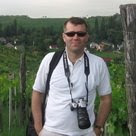
These images are samples of my interview pictures


Tibor Zsikla 0512485 DPVA

Proposal

Topic: I have been inspired to look at whether money really brings happiness. Specifically I have been looking at a group of people who are personally connected and relevant to me. This group of people are from the same generation and worked for the same industrial company. They worked abroad on missions to construct silos in Europe, Africa and Asia. They came from behind the ‘Iron Curtain’, from a socialist Hungary in the early 80’s. They built 'the socialism' by constructing silos in the socialist friendly countries. They earned US dollars, which was quite a contrast to what was normally permitted at the period of the Russian ‘Big brother’ and so-called ‘Cold war’.

My work is based on researching and studying the life of a generation, it is a sociological review of that generation’s golden age and subsequent fall. It is my father’s generation, for me the subject is therefore emotionally engaging. They had exclusive opportunity to work abroad when nobody was allowed to leave the ‘socialist block’. They worked far away from their families not seeing them for up to 1 year at a time. They were not prepared for the Western consumption based culture, for the wide range of items in the shops; VHS recorder, video cameras and other new technology etc.

Half of the ‘Big Team’ my Father was part of is already dead and those who are still alive are struggling with issues such as drinking, stress, depression and economic difficulties. This project intends to address the issue of whether being well paid, successful and having the chance to work in exotic locations is worth the cost. Is wealth worth the cost on your health, family and even shortening your life?

Research: I have been looking at a project by Bahget Iskander called, “Dollar earning Hungarians” (Dollárt kereső magyarok). This project depicted the daily life of the Hungarian silo workers. Iskander, was the official interpreter of the Hungarian Silo company, Agrikon (formerly called, Mezogep) between 1980-1982. As Iskander worked beside my father and other colleagues, he was able to develop this project as a witness, photographer and storyteller. I will try to approach this subject with a similar perspective while looking at the tension between the personal narrative and the wider sociological issues.

When I was 5, I saw the first images from one of the silo complexes in Algeria. It was 28 years later that I finally got to meet Iskander in person. ’Uncle’ Iskander advised me about the previous industrial photography project. I have researched industrial photographers; Bernd and Hilla Becher from Germany.Edward Burtynsky, a Canadian photographer who takes pictures of industrial sites and factories. I have also researched artists such as Fatih Akin, Kutlug Ataman and Iosif Kiraly.


Development: Apart from continuing to arrange interviews with the participants of the subject, I have also continued to collect original archive negatives and prints from the early 80s. While interviewing my Father's former colleagues, I had finally heard the genuine story of my Father's car crash. It was told on the top of some new silo cells, approximately at 30m off the ground. My father had to be smuggled out of the country on board of an egg delivery plane to prevent the possible lynch-law. I will continue to gather these first hand stories in order to find out as many details as possible about this tragedy and other events relating to these people. My plan is to include these personal and emotionally charged narratives in my work too.

I will continue to take portraits of the people I interview. Where the colleague is sadly not alive I will interview close family members. My aim is to build a complex picture about the generation. I will continue to record the audio from the interviews so I can refer back to what they say and possible even use the sound in some of my outcomes.

Outcome: In terms of an outcome, there are a lot of possibilities. The subject would suggest making a selection of short personal stories which introduces the viewer to this generation and the real situations it faces. I feel a good way to communicate these stories would be a book as this is how we normally have stories presented to us.

Thursday, 26 February 2009

New proposal

Proposal

Group of people who are same age and worked for same industrial company .They worked abroad missions to construct silos in Europe, Africa and Asia too. They came from behind the ‘Iron Curtain’ in the early 80’s at socialism era, ‘they built the Socialism’ by constructing silos in the socialist friend countries earning US dollars which was quite contrast thing at the that time of Russian ‘Big brother’ and ‘Cold war’.
My proposal is based on researching and studying the life of a generation, it is a sociological review of that generation’s golden age and fall. It is my father’s generation, for me the subject is therefore emotionally engaging. They had exclusive opportunity to work abroad when nobody was allowed to leave the ‘socialist block’. They worked far from their families not seeing them for 1 year sometimes, they were not prepared for the Western consumption based culture for the wide range items in the shops.VHS recorder and video cameras etc.
Half of the ‘Big Team’ ,the employees of the silo company who worked together for years abroad, are already dead and those are alive are struggling with life such as drinking, stress, depression and economic difficulties. This project intends to issue a life being well paid, successful and working a lot far from the family if the price of it losing health and the harmonious family life?
For the project were needed to get appointments, talking with witnesses of the subject, collecting original archive negatives and prints back to early 80’s .
The project has possibilities of lot of out comings. As in one hand it is a very personal but in the other hand it is a sociological review. It can be an almost 30 years long on-going project as it was fully documented and archived with images taken by Bahget Iskander . Iskander, the interpreter between 1980-1982 of the Hungarian Silo Builder Company, Agrikon (the former Mezogep)who took his photo series called Dollars earning Hungarians (Dollárt kereső magyarok) which were taken about daily life of the Hungarian silo workers. Iskander as he worked beside my father and others therefore he was able to support this project the most as witness of the subject, photographer and storyteller too. By that time I was 5 when I saw the first images about a silo complex in Algeria but our very first meeting had been waiting for almost 28 years.
’Uncle’Iskander advised about the project when the research was started with the famous industrial photographers couple from Germany( the Bechers, Bernd and Hilla Becher) then moved onto Edward Burtynsky, who is a Canadian photographer who takes pictures of industrial sites and factories. Making interviews with my father former colleagues, who worked for same company in Algeria, I had heard the genuine story of my father car crash, on the top of silo cells approximately at 30 m altitude, which result of it he had to be smuggled out of the country on board of an egg delivery plane to prevent the possibly lynch-law. I had been gathering stories to figures about their life that time.
Aim: Make the viewer think about meaning of life, find out about difficulties of this particular generation.
Hows: Making interviews with the members of the generation former colleagues of the company, taking portraits about the interviewed people, family members of the passed away employees to set up a storytelling reports getting a complex picture about their generation, back in Hungary.
Setting up series of images with a subtitled audio interview underneath.
Why: Being engaged with the topic, remembrance of their generation. To encourage consideration.
What is next: More research about storyteller documentaries filmmakers as Fatih Akin, Kutlug Ataman and Edward Burtynsky. The decision needs to be made about what form of this project take, which can be slide/audio installation, video or book as well. Making a good selection of short personal stories which achieve the aim to introduce that generation real situation to the viewer.

Sunday, 7 December 2008

Tuesday, 2 December 2008

Sunday, 30 November 2008